
How Grapevine Became the Christmas Capital of Texas |
Long before millions of visitors came for the lights, Grapevine's merchants, neighbors and city workers were building a Christmas tradition of their own. Here's how a hometown celebration grew into a title recognized by the Texas Senate in 2009. |
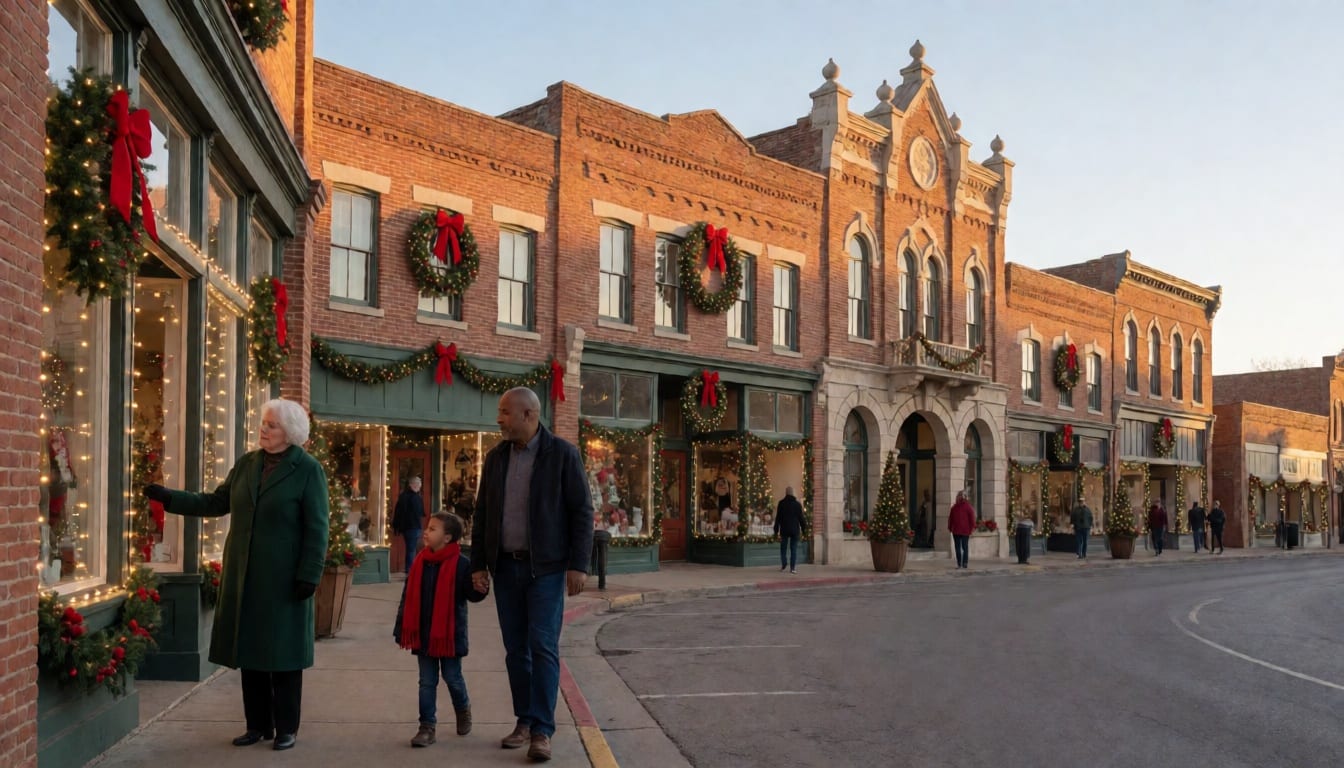
If you've walked down Grapevine's Main Street during the Christmas season, you know the feeling.
Lights stretch across storefronts. Wreaths hang above the brick sidewalks. Families stop to take photographs, and the whole downtown seems to glow a little brighter than usual.
It is easy to see why Grapevine calls itself the Christmas Capital of Texas.
But that name wasn't simply dreamed up for a holiday advertisement and forgotten.
It grew from years of local traditions, the efforts of downtown businesses, deliberate planning by city leaders and a remarkable amount of work behind the scenes.
In 2009, the Texas Senate formally recognized Grapevine as the Christmas Capital of Texas. By then, the city had spent years making Christmas a central part of its community identity.
And the story of how it happened is very much a Grapevine story.
Christmas Was Part of Grapevine Long Before the Title The history begins well before the words Christmas Capital of Texas appeared on signs.
Grapevine has long been a place where neighbors gathered for community celebrations.
According to historical accounts shared by the Grapevine Historical Society, Santa was making appearances on Main Street as far back as the 1950s, sometimes accompanied by live reindeer.
By the 1970s, the Grapevine Chamber of Commerce was helping organize larger holiday festivities, including seasonal celebrations, Christmas trees and the crowning of a holiday queen.
These weren't the enormous productions visitors know today.
They were local traditions, built around businesses, volunteers and families who wanted to make the season special.
For longtime residents, that distinction matters.
Christmas in Grapevine didn't begin when the city started attracting national attention. The foundation was already here, in the people and places that made downtown feel like home.
Main Street Merchants Helped Create the Magic By the late 1990s and early 2000s, Grapevine's downtown merchants were increasingly decorating their storefronts and helping make Main Street a holiday destination.
The lights, wreaths and displays grew year after year.
The timing was important.
Grapevine was already working to protect its historic character. The city adopted a historic preservation ordinance in 1991, and the Grapevine Heritage Foundation was established that same year.
The community had recognized the value of its older buildings and downtown streets long before Christmas became its best-known calling card.
That historic setting gave the holiday celebration something many newer shopping districts couldn't easily copy.
A visitor could walk through a real Texas downtown, browse independent shops, see historic buildings and enjoy Christmas decorations that belonged to the place.
Those brick sidewalks and familiar storefronts became part of the attraction.
The Christmas Capital identity grew out of that setting rather than replacing it.
A Tourism Idea That Grew Into Something Bigger There was also a practical reason for Grapevine to put more energy into Christmas.
During the 1990s, December and January were traditionally slow months for local hotels.
City tourism leaders saw an opportunity to encourage more visitors to stay, shop and spend time in Grapevine during the holidays.
P.W. McCallum, who led the city's Convention and Visitors Bureau, later described how the community began placing greater emphasis on Christmas at a time when few Texas destinations were promoting themselves around the holiday on such a scale.
The city embraced the Christmas Capital of Texas name and began building a broader collection of holiday experiences around it.
The goal wasn't simply to add more lights.
Grapevine developed a full Christmas season that could include shopping, live entertainment, train excursions, hotel attractions and opportunities for families to return year after year.
As the program expanded, it became a partnership between downtown businesses, local government, hospitality companies and the people helping organize the events.
That cooperation is one reason the idea lasted.
A successful holiday season could bring customers to local shops, guests to hotels and visitors into restaurants during a time that had previously been quieter.
The Texas Senate Recognized Grapevine in 2009 The community's growing reputation eventually reached Austin.
In 2009, Grapevine received formal recognition from the Texas Senate as the Christmas Capital of Texas.
Official accounts identify Texas Senate Proclamation No. 556 as the recognition associated with the designation.
State Senator Jane Nelson played a key role in supporting the effort. Grapevine leaders, including McCallum and Councilwoman Sharon Rogers, helped present the case for the city.
The state's legislative records also contain Senate Concurrent Resolution 40, introduced in 2009, which proposed recognizing Grapevine under the same title. That particular resolution is listed as having returned to committee, so it should not be confused with a completed law.
The important point is that Grapevine's recognized Christmas Capital title had a real history behind it.
By that year, the city was already known for an extensive program of holiday decorations, performances, train experiences and community events.
The recognition gave a statewide name to something Grapevine had been building for years.
The Train, the Lights and the Attractions Part of Grapevine's success came from giving families more than one reason to visit.
The Grapevine Vintage Railroad became part of the holiday experience through the North Pole Express, which brought children and families into the city's Christmas traditions.
The annual Carol of Lights helped mark the beginning of the downtown season with music, entertainment and a festive gathering.
The Palace Theatre added another historic setting for seasonal performances.
Larger destinations also helped broaden the city's appeal. The Gaylord Texan developed its elaborate Christmas offerings, while Great Wolf Lodge became known for Snowland.
But Grapevine's Christmas identity has never depended on just one attraction.
A family might come for the train one year and return for a performance or a walk along Main Street the next.
Residents may have their own familiar favorites, including quieter moments before the busiest weekend crowds arrive.
Together, those experiences helped turn one holiday celebration into a season of traditions.
The People Who Make Christmas Happen Anyone who sees Main Street glowing in December might wonder how all those decorations appear.
The answer begins long before Thanksgiving.
Grapevine Parks and Recreation workers have spent years building, repairing, installing and maintaining the city's Christmas displays.
A 2021 account from Grapevine's economic development office described a small core group of parks employees responsible for much of the preparation, working alongside seasonal helpers and contractors.
These workers also had regular park responsibilities during the rest of the year.
Christmas displays had to be designed, built, stored and maintained. Weather could damage decorations, and new ideas needed to be tested before the next season.
Volunteer residents and members of community organizations contributed time as well.
That work may be less visible than a light show, but it is one of the clearest reasons the Christmas Capital title means something.
For all the attention Grapevine receives as a holiday destination, the celebration depends on people who live and work here throughout the year.
Why the Christmas Season Matters to Local Businesses Becoming the Christmas Capital of Texas wasn't just about civic pride.
It also brought economic opportunities.
As holiday visitation grew, December became an increasingly important month for hotels, restaurants, retailers and the wider tourism economy.
In a 2021 analysis, Grapevine's economic development office described December as the city's strongest month for sales tax activity and linked holiday tourism to the wider strategy of supporting municipal services through visitor spending.
Those figures came from that period and should not be treated as a current financial forecast.
Still, the larger point remains relevant.
When visitors spend money at Grapevine businesses, that activity supports jobs and the local commercial district.
But success brings responsibilities too.
Heavy crowds, traffic, parking demands and the work of caring for historic spaces are all part of what it means to welcome large numbers of guests into a town where people also live.
For Georgia Lynn Prescott's hometown, the story isn't simply how many visitors Grapevine can attract.
It's how Grapevine continues welcoming the world while remaining a comfortable community for its residents.
What the Christmas Capital of Texas Looks Like Today Today, Grapevine's official tourism organization advertises more than 1,400 Christmas events and activities across roughly 40 days.
It also reports annual holiday visitation exceeding two million people.
Those are figures published by Grapevine's tourism organization, not independently audited counts for this article.
Even so, they illustrate the scale of what has grown from the earlier merchant decorations and community festivities.
The city now has a Christmas identity recognized well beyond North Texas.
Travelers come for the lights, the railroad, seasonal entertainment and the experience of walking through a historic downtown filled with Christmas spirit.
Yet the heart of the story remains remarkably familiar.
It's Main Street merchants making their shops welcoming, local workers preparing displays, families keeping traditions and neighbors sharing their town with visitors.
The attractions have grown. The Christmas season has become more elaborate.
But those local contributions still matter most.
Quick Facts: Grapevine's Christmas Capital of Texas History Community: Grapevine, Texas Known as: The Christmas Capital of Texas Historic roots: Longstanding local holiday celebrations, including mid-20th-century Main Street traditions Major growth period: Late 1990s and early 2000s Early contributors: Downtown merchants, community organizations, city tourism officials and volunteers Key tourism leader: P.W. McCallum, former Grapevine Convention and Visitors Bureau director State recognition: Texas Senate, 2009 Recognition cited by official accounts: Senate Proclamation No. 556 Historic downtown setting: Main Street and its preserved buildings Signature experiences: Carol of Lights, North Pole Express, Parade of Lights and seasonal entertainment Tourism organization figure: More than 1,400 events over approximately 40 days Visitor figure: More than two million holiday visitors annually, according to Grapevine tourism Official Christmas information: Grapevine's Christmas Capital of Texas website
A Title Built by a Community The Christmas Capital of Texas sounds like a grand title.
And today, with the lights, decorations and visitors, it certainly looks grand.
But the most interesting part of Grapevine's Christmas story isn't the size of the celebration.
It's how a community kept adding to something people already loved.
Merchants decorated their shops. Families came downtown. City leaders found ways to support the growing traditions. Workers and volunteers made the displays possible. And, eventually, the rest of Texas took notice.
That's how Grapevine earned a reputation that has lasted for decades.
For those of us who know the town outside the holiday season, it's worth remembering that the Christmas Capital of Texas is also somebody's hometown.
The best part of the tradition is finding room for both.
Sources and Further Reading Grapevine Economic Development: It Ain't Easy Being the Christmas Capital of Texas Grapevine Tourism: Christmas Capital of Texas official history and attractions U.S. Senator John Cornyn: The North (Texas) Pole Texas Legislative Reference Library: SCR 40, 2009 legislative history Texas State Historical Association: Grapevine historical overview Houston Chronicle: Historical traditions behind Grapevine's Christmas reputation Grapevine Economic Development: The Christmas Capital of Texas Lives Up to the Hype |
0 Comments
Join the conversation
Be the first to comment
Share your thoughts above.